
THE BUILDING PRODUCT E-BULLETIN
THE BUILDING PRODUCT E-BULLETIN
28 September 2026

Lichfield Road, Branston, Burton Upon Trent, Staffordshire, England, United Kingdom , DE14 3HD
T: 01283 722588
E: info@marley.co.uk
W: https://www.marley.co.uk/
With solar panel-related fires on the increase, Kevin Taylor, Training and Technical Support Manager at Marley urges specifiers to select solar solutions that are rigorously tested to protect people and property.
Recent government figures reveal that more than 170,000 solar panel installations took place in the UK in 2026, bringing the total number of installations to over two million.
Solar PV continues to grow in popularity, driven by energy costs, environmental concerns and the impact of new building regulations, including the Future Homes Standard.
However, increased investment and specification must go hand in hand with a clear focus on product safety, system compatibility and installation best practice.
Unless exemptions exist with individual energy providers, all domestic and commercial solar installations should be installed by appropriately qualified, MCS-accredited installers, using MCS approved products, with the completed system maintained in accordance with the manufacturer’s requirements. Whilst not a strict legal requirement for new build homes, an MCS certificate is commonly requested by building control, warranty providers and mortgage lenders to provide compliance and quality.
Flexi-Orb is another UKAS accredited scheme which acts as a quality mark and alternative to MCS. Roofing contractors are increasingly working alongside approved installers to provide additional competence in installing panels and flashings correctly on pitched roofs, in some cases seeking their own MCS accreditation.
This is particularly important considering a recent report, which states that the rate of solar panel fires is increasing at more than twice the rate of installations, with fires rising by 133% between 2022 and 2025.
One of the most prominent causes of solar fires is associated with DC connections. Incorrect connection or cross-mating of connectors can create electrical arcs, potentially resulting in fire spreading behind panels and into the roof space. Specifiers must therefore also be alert to the use of non-compliant panels, mounting systems and flashings.
Crucially, solar modules and mounting systems must be tested together as a complete system to establish their fire performance. Independent certification of individual components does not necessarily demonstrate they are certified when used in combination.
An MCS-compliant installation using a roof-integrated solar mounting system requires the mounting system to be used with modules specifically listed on its MCS 012 certificate, identified by their model code, as having an appropriate fire classification when installed with that mounting kit.
While individual solar modules may be certified to MCS 005 and mounting kits to MCS 012, this does not automatically mean the two products are certified as a combination.
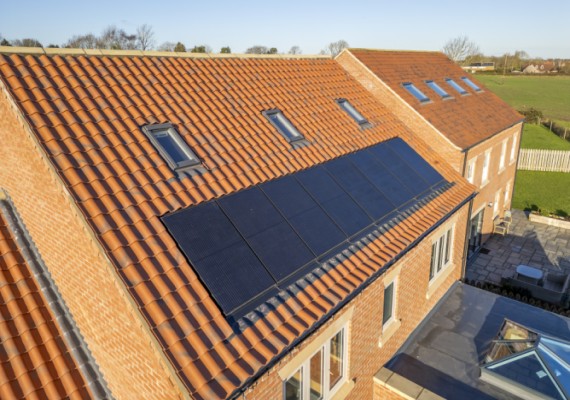
The Marley SolarTile® roof-integrated solar system has achieved the highest classification for resistance to the spread of flame and fire penetration in European fire safety tests (BRoof T1, T2, T3 and T4). This is supported by independently verified BBA Solar System certification covering the solar panels, solar flashings and their combined system.
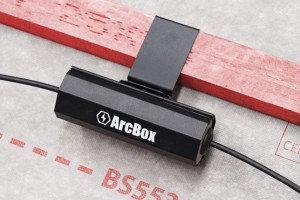
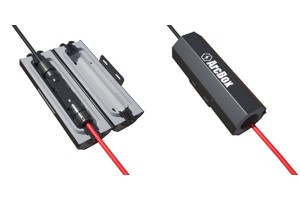
The Marley solar solution also includes ArcBox, a ‘2-click’ solution that encloses a DC connector. If an electrical arc occurs, ArcBox is designed to contain it and help prevent the arc from spreading to combustible materials around the installation.
For specifiers, the message is clear: solar safety should begin at the specification stage, with compatible, tested and certified systems selected to protect people, buildings and property.
View Previous Article
CRL Stone launches dedicated Silica Free & Low Silica Collection brochure

TSP Media
Grosvenor House
Central Park
Telford
TF2 9TW