
THE BUILDING PRODUCT E-BULLETIN
THE BUILDING PRODUCT E-BULLETIN
06 August 2026

Sustainable Homes Scotland Ltd, t/a PAUL Heat Recovery, Unit D, Pitreavie Business Park, Pitreavie Crescent, Dunfermline, Scotland, KY11 8PU
T: 01383 221 255
E: info@paulheatrecovery.co.uk
W: https://www.paulheatrecovery.co.uk/
The original Passivhaus concept envisaged heating a dwelling primarily through the Heat Recovery Ventilation system (MVHR), using a small heating element within the ventilation air stream. However, concerns about low indoor humidity levels contributed to this approach losing momentum.
Today, advances in technology have addressed these concerns. Modern Energy Recovery (ERV) heat exchangers can recover both heat and moisture, making supplementary heating—and increasingly cooling—through MVHR a viable option once again.
That said, combined MVHR heating and cooling systems require careful specification. Expectations can easily exceed the technical capabilities, making it essential to work with experienced specialists, like PAUL Heat Recovery.
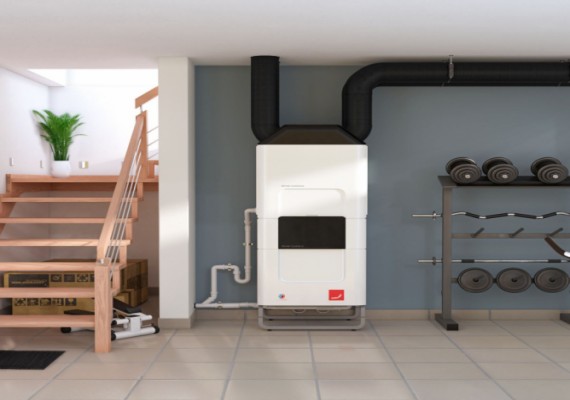
Several manufacturers now offer integrated solutions. Some systems, like Zehnder’s ComfoClime combine MVHR with heating and cooling modules, while others utilise reversible heat pumps to operate post-heaters. More comprehensive approaches, like Nilan’s Compact P, integrate MVHR and heat pump technology in one single unit, to provide domestic hot water (DHW), supplementary space heating and cooling.
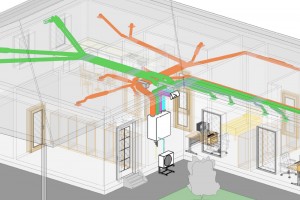
A new generation of MVHR (Big Magic) combines MVHR with an external air source heat pump and directs cooled air to individual rooms that are in danger of overheating, providing more targeted effect.
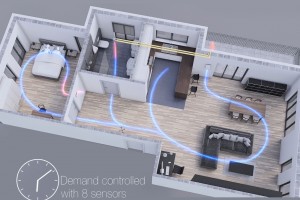
Room-by-room and demand controlled ventilation systems can also deliver significant improvements in indoor air quality, compared with conventional approaches.
Why Settle for Mediocre Indoor Air Quality?
Well-specified systems have been shown to make a noticeable difference to occupants’ health, comfort, and wellbeing, with some projects reporting dramatic improvements.
The key question is: what constitutes a good ventilation specification?
Current UK regulations establish minimum ventilation rates intended to provide a basic level of ventilation. However, these standards do not define specific indoor air quality targets. Unfortunately, almost all ventilation systems, including MVHR, are designed simply to achieve compliance, with no consideration given to actual outcomes.
PAUL Heat Recovery examined the impact of this approach in small and medium-sized dwellings across the UK. In many cases, CO₂ levels in principal bedrooms were found to rise to 1,250 ppm and even 1,400 ppm, which is a mediocre level of air quality.
By optimising the distribution of airflow rates, expected CO₂ concentrations could be reduced to around 1,000 ppm, in most cases without increasing system costs.
Improving indoor air quality does not necessarily require more ventilation—it often requires smarter ventilation design.
PAUL Heat Recovery is encouraging the industry to move beyond minimum compliance and towards performance-led ventilation specifications that deliver healthier indoor environments and better outcomes for building occupants.
View Previous Article
Why design confidence starts with earlier collaboration

TSP Media
Grosvenor House
Central Park
Telford
TF2 9TW